

The introduction of the Qlik Cloud endpoint is a significant step forward. To further enhance this capability, it would be highly valuable to enable the automatic generation of Qlik master items (measures and dimensions) directly from the Delivery instance (semantic layer).
Currently, it is already possible to define measures and custom fields within the semantic layer. Building on this, we propose extending the functionality by allowing additional properties to be specified for these objects, specifically for the Qlik Sense / Qlik Cloud endpoint.
This would enable seamless creation and management of master items in Qlik, improving consistency, governance, and reducing manual effort.
Proposed enhancement:
Allow defining Qlik-specific properties on semantic layer objects:
-
Measures:
- Name
- Description
- Expression
- Label expression
-
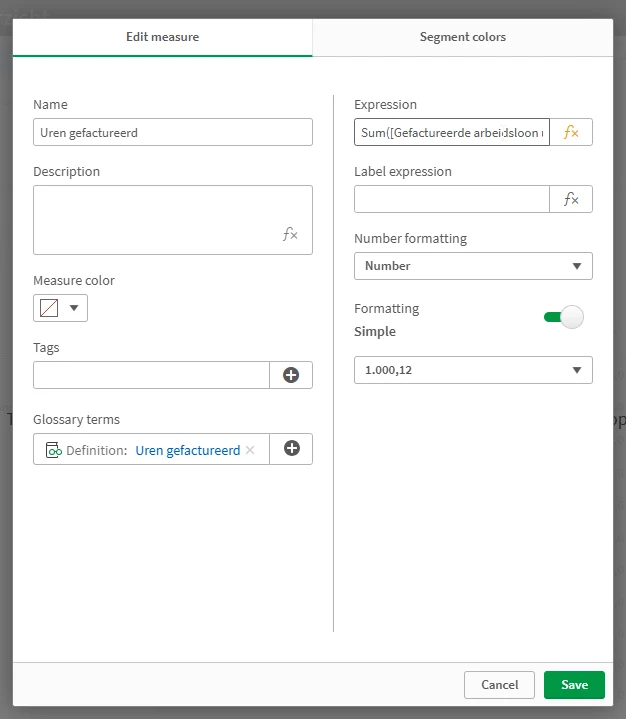
Qlik Cloud: Master Item: Meaure dialog
-
Dimensions / Custom fields:
- Field
- Name
- Description
- label expression
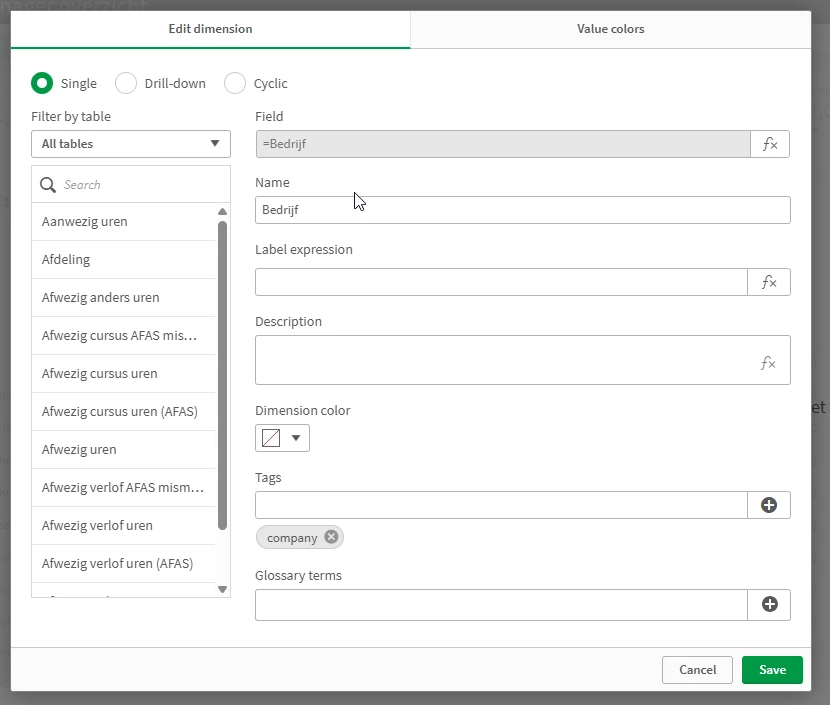
Qlik Cloud: Master Item: Dimension dialog
With this enhancement, master items could be automatically generated and maintained from within TimeXtender, eliminating the need for manual setup in Qlik and ensuring alignment between the semantic layer and the reporting layer.
Measures and dimensions in Qlik are bound to a specific app. To better support this, I suggest introducing an additional Delivery instance configuration where the target Qlik app can be explicitly defined by specifying both the space name and app name.
Upon deployment of this semantic layer, the system could establish a connection to the designated Qlik app and automatically create or update master items using the Qlik Engine JSON API, specifically the CreateMeasure and CreateDimension methods. The properties defined in the Delivery instance (such as name and description) would be used as input for these API calls.
This approach would provide a more integrated and automated way to manage Qlik master items directly from TimeXtender, ensuring alignment between the semantic layer and the Qlik application while reducing manual configuration.
