



Views are a flexible way to get up-to-date data without the hassle of execution. However, reading from a complex view can take much longer than reading from a table with a comparable amount of data. The Persist View option stores a view's results for faster access. The tradeoff is that you need to execute the view to get updated data.
Enabling or disabling the Persist View option
To enable or disable the persist view option:
- Right-click the view, and under Advanced, select Persist View.
SQL storage
When you persist a view on SQL storage, TimeXtender creates a table with the same name as the view and renames the view by appending "_p". All other tables and views that read from the view use the table automatically.
Manually creating a table from a view
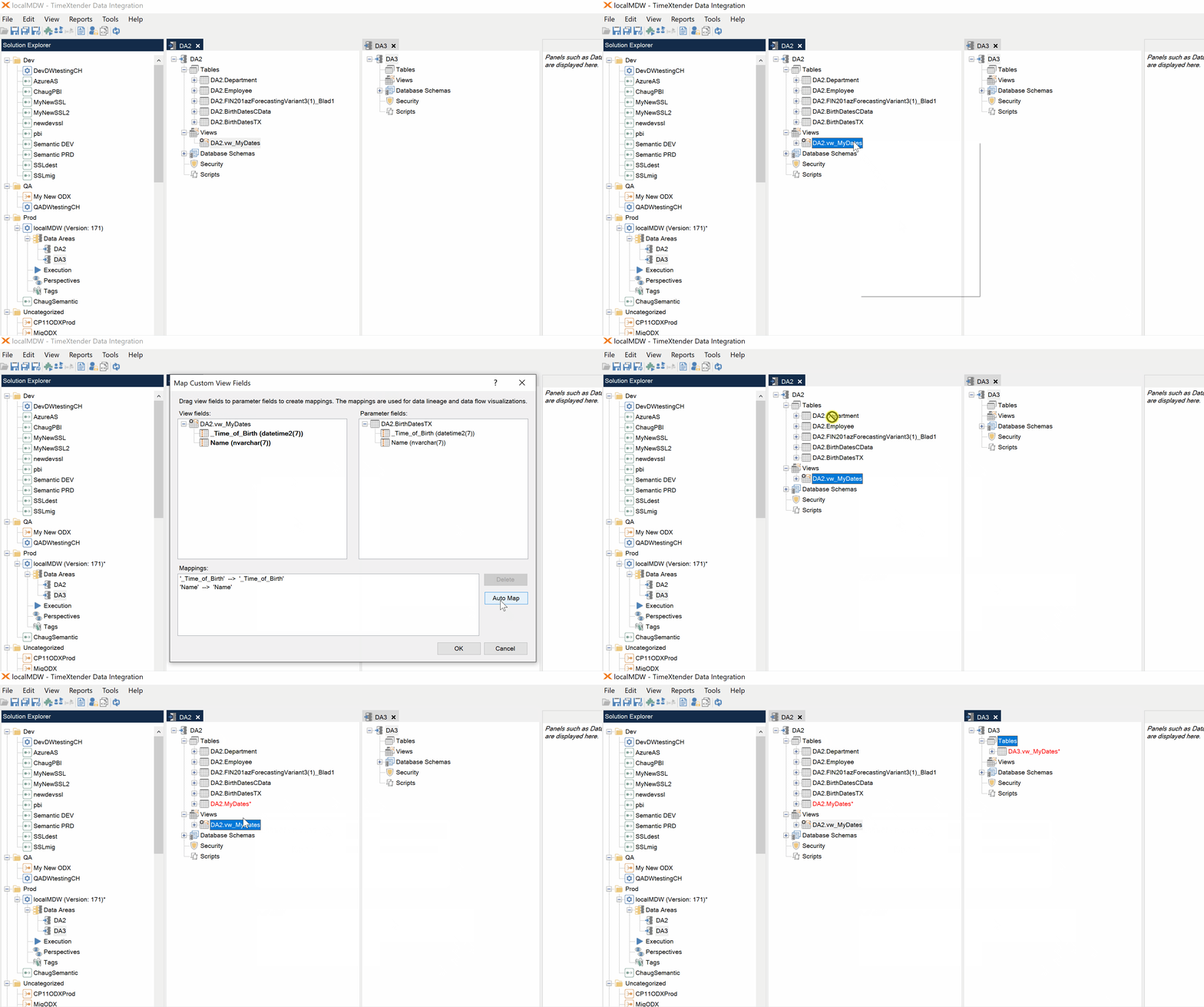
A persisted view can also be manually created as a table by dragging the view onto the table node of a data area. Before doing so, right-click the view and select Read View Fields or Synchronize View Fields. Then right-click Map Custom View Fields and map the fields to enable visualizations such as Data Lineage.
Fabric Lakehouse storage
When you persist a view on Fabric Lakehouse storage, TimeXtender stores it as a Delta file, creating a materialized view in the Lakehouse. Unlike standard Fabric custom views, which are accessible only via the Lakehouse SQL endpoint, materialized views work like regular tables and can be referenced from custom scripts, transformations, and table inserts.
When you execute the view, TimeXtender runs the persisted view definition and stores the results as a Delta file.
Note: Persisted custom views must use a syntax that is valid T-SQL and Spark SQL. Persisting a custom view requires Spark SQL, while the view is read thought the SQL Endpoint for Preview/Query Tool and when copying data to another instance.
